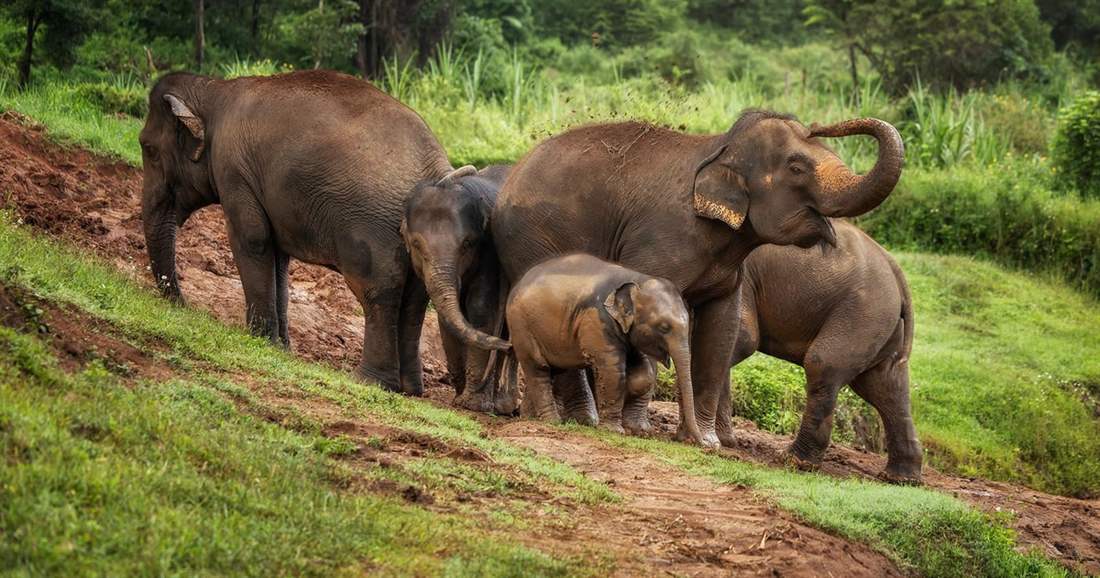
A chiang mai elephant sanctuary tour takes you into the hills around Chiang Mai to meet elephants. Guides explain how the herd is cared for and what visitors can do.
The sections below cover how a sanctuary differs from a camp, plus tour formats and locations. They also cover the elephants, what to wear, the seasons, GetYourGuide listings and common questions. To plan trips elsewhere in the country, start from the Thailand Tours homepage.
What does a chiang mai elephant sanctuary tour cover?
A chiang mai elephant sanctuary tour is a trip from Chiang Mai to a sanctuary in the countryside. It starts with hotel pickup, then adds a briefing, feeding, a local meal and a return drive. A waterfall stop joins the day on plans that list one.
Each chiang mai elephant sanctuary tour sets its own daily plan. The steps below follow the plans of two operators. One operator states that its timings are only approximate, apart from the pickup times.
- Pickup: you are collected from your hotel or accommodation in Chiang Mai.
- Drive: the road runs past farms, hill tribe villages and rice fields.
- Arrival: you are greeted and change into Karen clothing before the briefing.
- Briefing: guides explain the sanctuary and its elephants.
- Feeding: you help prepare food and snacks, then feed the elephants.
- Walking and watching: one operator lists a forest walk with the elephants, and another lists watching them forage.
- Lunch: a local meal is served.
- Afternoon tasks: one full-day plan lists helping the mahouts plant seedlings or cut grass, and drinking herbal tea.
- Waterfall or rafting: plans that add them list a waterfall break and, on one plan, bamboo rafting on the Mae Wang River.
- Return: you are dropped off at your hotel in Chiang Mai.
What does sanctuary mean on a chiang mai elephant sanctuary tour? Wikipedia calls an animal sanctuary a facility where animals live and are protected for the rest of their lives. It adds that, unlike zoos, sanctuaries do not breed animals or exhibit them for human entertainment.
One operator describes an elephant sanctuary as a dedicated reserve where rescued elephants are rehabilitated.
Read the order of events before you pick a chiang mai elephant sanctuary tour. One operator’s plan puts a waterfall stop before the sanctuary visit and ends with bamboo rafting. Another plan puts its waterfall break in the afternoon, after lunch, and adds a handmade souvenir task after it.
Feeding and walking also swap places between operators. One plan feeds the elephants straight after the briefing. Another sends you on a nature walk first, with feeding during the walk.
The order of the day is one question, and the food on offer is another. Whether the kitchen can cater for allergies is answered in the guide to an elephant sanctuary in Phuket.
A half-day chiang mai elephant sanctuary tour keeps the same core steps. One operator’s morning plan has a briefing, feeding, a waterfall break, lunch and a farewell to the elephants. Then comes the return drive to Chiang Mai.
Use this order as a checklist when you compare each chiang mai elephant sanctuary tour. The sections after this one cover every step in turn. To compare other trips, browse our Thailand tours.
What separates a sanctuary from an elephant camp on a chiang mai elephant sanctuary tour?
Riding and shows mark the line between an elephant camp and a sanctuary. World Animal Protection says genuine sanctuaries never offer elephant riding as well as washing experiences. Before you book a chiang mai elephant sanctuary tour, check whether the venue offers rides, shows or washing.
The Department of Livestock Development says about 223 elephant camps exist in Thailand. Wikipedia sorts camps into three groups: observation only, non-riding camps that allow other activities, and elephant riding camps. The groups differ by what visitors do. Read the activity list on a chiang mai elephant sanctuary tour page first.
World Animal Protection assessed 236 tourism venues in Thailand, housing 2,849 elephants. Pick a chiang mai elephant sanctuary tour that bans riding.
A hands-on programme lets visitors wash or care for the elephants. A hands-off programme, also called observation only, has no direct contact between people and elephants. World Animal Protection says 54% of elephants are now used in washing or caretaking activities. Only 7% live where visitors watch from a distance.
World Animal Protection says elephants do not need visitors to wash them. It says captive elephants avoid close contact with people they do not know when they have a choice. It also warns that the word sanctuary can mislead tourists at venues offering washing or care-taking activities.
Hands-off does not settle every question. World Animal Protection says an observation-only venue does not guarantee better welfare. Wikipedia reports a study by the Centre of Elephant and Wildlife Research. In it, elephants in an observation-only programme had higher stress hormone levels. Even a hands-off chiang mai elephant sanctuary tour needs a closer look at how the elephants live.
Each chiang mai elephant sanctuary tour sets its own daily plan, so ask these questions before you book:
- Does the venue offer rides or shows?
- Can visitors wash, feed or touch the elephants?
- Are the elephants chained during the day?
- Can the elephants mix freely with each other?
The last two questions follow the World Animal Protection report. It found that more than half of captive elephants were kept on short chains during the day. Only a quarter were free to interact with other elephants while unchained.
Rules about animals are only one kind of house rule. Boxing fans can find out whether betting is allowed at the stadium in the Patong muay thai tickets guide.
Read the full description before you choose a chiang mai elephant sanctuary tour. If it lists riding, shows or washing, you know which kind of venue it describes. If it lists observation only, the venue offers no direct contact.
Which chiang mai elephant sanctuary tour format suits you?
Listings for a chiang mai elephant sanctuary tour run from 3 hours to a full day. Half-day tours centre on feeding and washing the elephants. Full days add a waterfall, a raft ride or a temple stop. One operator also runs observation-only programmes.
Half-day listings run from 4 to 6.5 hours. One lists 6 to 6.5 hours and has you walk beside the herd and feed them fresh fruit. Another lists 4 hours with local hill-tribe caretakers. Choose a half-day chiang mai elephant sanctuary tour if you want the sanctuary without a long day.
A feeding programme is a half-day tour that names feeding in its title. Its listing says you help wash the elephants, feed them and learn about their habitats. Another listing offers small-group feeding and bathing. Each chiang mai elephant sanctuary tour sets its own daily plan, so read the listing.
Mud spa and bathing show up as steps inside longer tours. One listing offers a mud spa and a river bath, with lunch and transfer included. Another lists a mud spa and a river swim. A third says you bathe with the elephants in the river. Ask whether your chiang mai elephant sanctuary tour includes these steps.
Observation-only programmes are about watching the herd. One operator lists a half-day morning observation from 6.30 am to 1.30 pm. Its half-day afternoon version runs from noon to 7 pm. Its full-day version runs from 8 am to 5 pm. Read the plan before you book a chiang mai elephant sanctuary tour of this kind.
A full-day listing can pair the sanctuary with a second stop. Pick a chiang mai elephant sanctuary tour with the stop you want.
Water is one add-on. One one-day listing adds a jungle trek to a waterfall and bamboo rafting on the Mae Wang River. One 7-hour listing adds the Bua Tong Waterfall. One 10-hour listing adds bamboo rafting on the Wang River.
Culture stops are add-ons too. One 8-hour listing adds Doi Suthep temple to the sanctuary visit. An operator lists a programme with a sunrise at Suthep Temple that starts at 4.30 am. For a village stop, one 6-hour listing includes exploring a Thai village. A one-day listing adds a Thai cooking workshop.
Temple and village stops also shape a longer journey into the far northern province. Can you drive yourself on a day trip to Chiang Rai? Its own guide answers that.
Two-day options exist as well. One operator lists an overnight programme of 2 days with elephant and village activities. Another lists a 2-day trip with a homestay. Each one stretches a chiang mai elephant sanctuary tour beyond a single day.
Where does a chiang mai elephant sanctuary tour go?
A chiang mai elephant sanctuary tour heads into the hills outside the city. Two operators put the drive at about 1.5 hours from central Chiang Mai. One operator offers free hotel pickup within 5 km of the Old City.
One operator says its sanctuary is about 1.5 hours from downtown Chiang Mai. Traffic, weather and current road conditions change that time. Another operator gives the same 1.5 hours from the Old City. Both offer a short break about halfway. On a chiang mai elephant sanctuary tour with the first operator, the break has food, refreshments and bathrooms.
Mae Taeng is a district in the northern part of Chiang Mai province. It borders Mae Rim. Wikipedia places one sanctuary park in Mae Taeng, approximately 60 kilometres from Chiang Mai city.
The article says the park was founded in a valley about an hour north of the city. That park sits north of the city, so a chiang mai elephant sanctuary tour to Mae Taeng runs north.
Mae Rim lies in the central part of Chiang Mai province. It shares a border with Mueang Chiang Mai district and with Mae Taeng. One GetYourGuide listing carries the district in its title: Meet an Elephant Family at Mae Rim Sanctuary. That listing runs 6 hours.
Mae Wang also lies in the central part of the province. Its seat, Ban Kad, is a satellite town of Chiang Mai. One operator lists its elephant camp in Mae Wang district, so its chiang mai elephant sanctuary tour goes there.
Chom Thong lies in the southern part of Chiang Mai province. Doi Inthanon National Park is in this district. Wikipedia says the park is approximately 60 kilometres from Chiang Mai. It calls Doi Inthanon the country’s highest mountain, at 2,565 metres. One operator runs a Doi Inthanon hiking programme with pickup from 6.30 to 7 am.
The operator with the 5 km radius collects guests from a hotel, a meeting point or a private residence. Pickup from outside that radius carries a surcharge.
On one operator’s chiang mai elephant sanctuary tour, a 12-seater, air-conditioned van covers the first part of the journey. For the final 10 minutes, a 4×4 truck with roofed bench seating takes over.
The bulk of that drive is on paved public road, but the final portion is unpaved.
What do you learn about the elephants on a chiang mai elephant sanctuary tour?
A chiang mai elephant sanctuary tour puts you near Asian elephants. An Asian elephant eats about 150 kg of vegetation a day. It needs 80 to 200 litres of water a day. Adult males average 4 tonnes in weight.
A chiang mai elephant sanctuary tour lets you watch elephants live in a herd. Cows and calves move about together as groups. Cows form extensive and very fluid social networks. Bulls leave their mothers when they reach adolescence. A calf is suckled for up to three years. Groups of up to 15 adult females have been recorded.
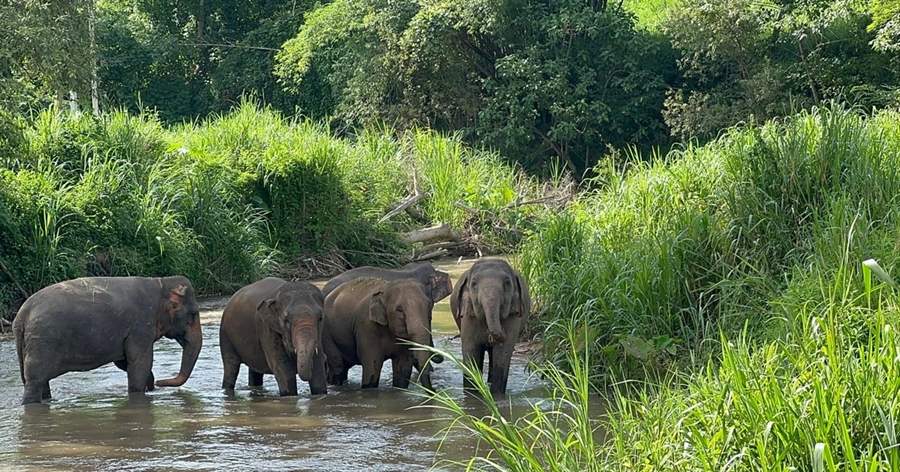
Eating fills 50 to 75% of an elephant’s day. Asian elephants are both grazers and browsers. They browse more in the dry season. Bark forms a major part of their diet in the cool part of that season. The trunk brings food and water to the mouth. Elephants use even more water for bathing.
Wild Asian elephants live to about 60 years old. Wikipedia says they die at a much younger age in captivity. The gestation period is 18 to 22 months, and a cow gives birth to one calf. A calf weighs about 100 kg at birth. The IUCN has listed the species as Endangered since nineteen eighty-six.
Wild animals are not the only thing visitors have rules about. The James Bond Island tour from Phuket guide lists the park rules that apply there.
Adult females average 2.7 tonnes in weight. Elephants average 3 to 4 hours of sleep a day. Wikipedia says elephant intelligence has been compared with that of primates and cetaceans. A guide on a chiang mai elephant sanctuary tour can explain these traits.
Wikipedia calls logging the primary occupation of Thai elephants and their mahouts. After the ban, trainers had to find other ways to feed themselves and their elephants. One operator says habitat loss and strict laws mean domesticated elephants cannot be released back into the jungle.
On a chiang mai elephant sanctuary tour, the guide explains how the herd is fed. One sanctuary describes its elephants hunting for tender tree leaves to nibble on. It lists a year-round food supply and lets visitors help grow food for them. Another operator says guests see its elephants graze and roam the grounds.
A mahout is an elephant rider, trainer or keeper, says Wikipedia. In Thailand the word is kwan-chang. Wikipedia adds that a mahout retains his elephant throughout its working life. One operator says a mahout dedicates their life to caring for elephants. Ask who looks after each elephant on your chiang mai elephant sanctuary tour.
Wikipedia reports that one sanctuary in Mae Taeng District received support for mahout training. The support also aimed to ease foot disease and stress among elephants. It aimed to improve their diet, sanitation and exercise as well.
One operator says vets and caretakers both play a role in the elephants’ well-being. Ask how your chiang mai elephant sanctuary tour supports that care.
What do you wear and bring on a chiang mai elephant sanctuary tour?
Wear light, breathable clothing and comfortable walking shoes or sandals. Bring sunscreen, a hat, insect repellent and a refillable water bottle. One operator adds a swimsuit for the water and provides towels afterwards. Pack these for any chiang mai elephant sanctuary tour.
One operator recommends light, breathable clothing and comfortable walking shoes or sandals. A second operator suggests shoes with a good profile and trousers for sun protection while trekking.
The Chiang Mai sun can be strong, so the first operator recommends sunscreen, a hat and sunglasses. It adds insect repellent for the jungle walk. For a chiang mai elephant sanctuary tour with a river stop, pack a swimsuit. It advises against using a device that is not waterproof during water activities.
Kit lists change again for a trip based in Krabi. Which clothes and gear suit a visit to an elephant sanctuary in Krabi has its own guide. Phone signal at sea is covered in the guide to a Phi Phi Islands trip from Krabi.
The second operator suggests a poncho, which it says can easily be bought locally. It also says elephants are wild animals and extremely strong. It asks visitors not to sneak up behind them, tease them, make loud noises or move suddenly.
That operator says to stand to the side, because elephants have a blind spot directly in front. Its mahouts are trained to keep everyone safe. On a chiang mai elephant sanctuary tour, listen to them. Do not approach a young elephant without her mahout, as this can stress her.
In its wild elephant guidance, Thailand’s tourism authority calls elephants wild animals, not pets. It also says flash can agitate them.
Feeding and touching rules differ by operator, so ask before a chiang mai elephant sanctuary tour starts. One operator answers the touch question with no: guests observe at a respectful distance. The second operator describes guests feeding and bathing the elephants.
A visitor account on the World Animal Protection site says staff kept guests at a safe distance. Guests also had to leave behind any food in their bags, because the elephants sniff it out.
The first operator says all ages are welcome, with close parental supervision around the elephants. Its blog says other sanctuaries can set age limits, mainly for safety. Close contact, such as feeding, can require children to reach a certain age. Look up the age rule first, then book your chiang mai elephant sanctuary tour.
The first operator says its half-day programme welcomes all fitness levels, while its full-day programme includes moderate hiking. It says the majority of temples on its temple programme are not accessible to people with mobility issues. The reasons are uneven terrain and staircases.
Fitness and mobility count on other active days near the city too. For a harness and steel cables, see what a Chiang Mai zipline is and how its day runs.
Tell your operator about allergies and health issues before the visit. The first operator asks for notice of dietary restrictions or health issues and says it can accommodate all dietary requirements. It lists allergy medication as something guests bring themselves. It also says no special vaccinations are needed to interact with elephants.
Guests who are pregnant, use a wheelchair or have a pre-existing condition can need to sign a waiver there. It recommends medication for motion sickness on the mountain drive. Ask about these rules when you book a chiang mai elephant sanctuary tour.
Which season suits a chiang mai elephant sanctuary tour?
Thailand has three seasons: summer, rainy and winter. Wikipedia places the rainy season between the fifth month’s midpoint and mid-October. August is Chiang Mai’s wettest month. Look at the season first when you pick a chiang mai elephant sanctuary tour.
Wikipedia dates the other two seasons as well. The summer season stretches from mid-February up to the fifth month’s midpoint. Winter runs from mid-October to mid-February. These dates cover Thailand as a whole.
Summer is the hot season. In April, Chiang Mai’s mean daily maximum is 36.7°C. A chiang mai elephant sanctuary tour in summer meets that heat.
Winter is the cool season. Chiang Mai’s mean daily minimum is 16.9°C in December and 15.7°C in January. Wikipedia adds that dry-season nights can be cool and much lower than daytime highs. January brings 11.3 mm of rain, and February brings 9.6 mm.
The rainy season brings far more water. Chiang Mai receives 223.3 mm of rain in August and 207.2 mm in September. Wikipedia says dry spells of one to two weeks commonly occur from June to early July.
Smoke is another seasonal fact. Wikipedia says Chiang Mai’s air pollution primarily occurs every year between December and April. Check the air quality before a chiang mai elephant sanctuary tour in those months.
Waterfall stops change with the season. One operator says the flow is stronger, and slightly more slippery, between July and October. Another listing says swimming is seasonal. In drier periods the water can fall short of what a full swim needs. A waterfall break on a chiang mai elephant sanctuary tour is not a guaranteed swim.
Seasons count at sea too. Readers choosing a time of day and year for a private Phi Phi Islands tour can check its guide. Travellers also ask about the Phi Phi Islands trip from Phuket, and a separate guide answers them.
Start times split the day. One operator lists a morning tour with hotel pickup from 7.00 to 7.15 am. Its duration is 7 hours. Another lists morning pickup from 6.30 to 7.00 am. Its afternoon pickup runs from 12.00 to 12.30 pm. Compare start times before you book a chiang mai elephant sanctuary tour.
Pickup times can move. The second operator says collection times can vary slightly with the pick-up location. It emails you if your pickup time changes. The first operator says its timing can change with the season and the situation.
Weather can also change a chiang mai elephant sanctuary tour. One operator says its itinerary is subject to change because of bad weather or other force majeure events. Two operators say heavy rain can stop swimming, because safety comes first. One listing adds that its waterfall is fed from Doi Inthanon Mountain, so conditions can shift with weather.
GetYourGuide’s supplier help lists bad weather as an example of force majeure. It defines force majeure as unforeseen events beyond the supplier’s control that prevent the activity from taking place. Read the plan of each chiang mai elephant sanctuary tour as a plan that can change.
Which chiang mai elephant sanctuary tour packages can you book on GetYourGuide?
GetYourGuide lists a chiang mai elephant sanctuary tour from 3 hours to a full day. Tour 826521, the main package, lasts 1 day. Its rating is 4.9 from 12,278 reviews. It lists a Thai-style lunch and bamboo rafting, and offers pickup and free cancellation.
Tour 826521 is called Chiang Mai: Elephant Sanctuary, Waterfall & Bamboo Rafting. Its listing describes a sustainable sanctuary for over 36 rescued elephants. The highlights name waterfalls, rafting on the Wang River and elephant care without riding. A booking needs a lead time of at least 7 hours. It has the highest review count of the 20 listings in the widget.
The Feeding Program Half-Day Tour takes 5.5 hours. Its rating is 4.9 from 7,305 reviews. Its listing names the Pon Elephant Sanctuary south of Chiang Mai and says you help wash and feed the elephants. This is the highest-reviewed half-day chiang mai elephant sanctuary tour in the widget.
The group tour to a waterfall lasts 7 hours. Its 6,015 reviews give a 4.9 rating, and it carries a Bestseller badge. Its listing describes walking with rescued elephants to a waterfall.
The Long Neck & Sticky Waterfall listing takes 9 hours. It scores 4.9 from 2,934 reviews. Its highlights include a Thai lunch with local dishes and fruit. This chiang mai elephant sanctuary tour also lists river bathing with the elephants.
The small-group listing at Lanna Kingdom Elephant Sanctuary runs 5 to 8.5 hours. Its 1,605 reviews give a 4.9 rating, and it carries a Wheelchair accessible label.
The Elephant Jungle listing has lunch and transfer in its title. It runs 3 to 6 hours, and its 745 reviews give a 4.8 rating. Between them, these two listings cover a chiang mai elephant sanctuary tour of 3 to 8.5 hours.
Two listings name Living Green Elephant Sanctuary. The 10-hour bamboo rafting listing has 517 reviews and a 4.9 rating. It says a partial refund is paid on site if rain makes the water too high to raft.
The other Living Green listing lasts 7 to 10 hours. It has 210 reviews and a 4.8 rating.
In the widget, all 20 listings carry two labels: Free cancellation and Pickup available. Cut-off times differ. Read the cut-off time on your listing before you pick a chiang mai elephant sanctuary tour.
Seven listings carry a Small group label, and two carry a Private group label. Three listings show a New activity label and no reviews yet. A new chiang mai elephant sanctuary tour has no rating to compare, so read its listing page.
Do you still have questions about a chiang mai elephant sanctuary tour?
One operator offers Thai and English speaking guides and takes bookings at least 24 hours ahead. It covers all visitors with insurance and has no Wi-Fi at its sites. Use the answers below to plan a chiang mai elephant sanctuary tour.
Which language does the guide speak on a chiang mai elephant sanctuary tour?
One operator says it offers Thai and English speaking tour guides. Its preparation page says an experienced guide fluent in both English and Thai joins you. Its Doi Inthanon hiking page says a tour guide accompanies you throughout the excursion. Ask which languages the guide speaks before you book.
Can you use a phone or camera?
One operator welcomes a camera or other personal photographic equipment on a chiang mai elephant sanctuary tour. It offers a photography service at no charge and normally uploads the photos within 72 hours. Mobile service is limited and there is no Wi-Fi at any of its locations. Its temple page says you can take photographs inside the temples.
How far ahead do you book a chiang mai elephant sanctuary tour?
One operator says bookings must be made at least 24 hours before the visit starts. Same-day requests are not guaranteed. It says a tour amendment 24 hours before the visit date is possible without charge. It also lets you change your programme if you tell it at least 24 hours ahead. Another operator emails a tour confirmation within 24 hours.
Does a tour include insurance?
One operator says all visitors are covered by its insurance policy. It says it provides accident insurance during the visit. It also highly recommends personal travel or medical insurance before you arrive in Thailand. Ask what cover your chiang mai elephant sanctuary tour includes.
Do you have to swim or raft on a chiang mai elephant sanctuary tour?
One operator says taking part in river activity is not mandatory. For its bamboo rafting, it says you need no rafting experience and life vests are provided. Another operator answers yes to a question about swimming in the river. It says guests are encouraged to enjoy the cool mountain water.
What luggage can you bring?
One operator welcomes a day pack or small bag on its chiang mai elephant sanctuary tour. If you want to bring a suitcase or extra luggage, tell the operator before your visit. It accepts no responsibility for items lost, damaged or forgotten on its premises. If you leave something behind, it asks you to phone as soon as possible.