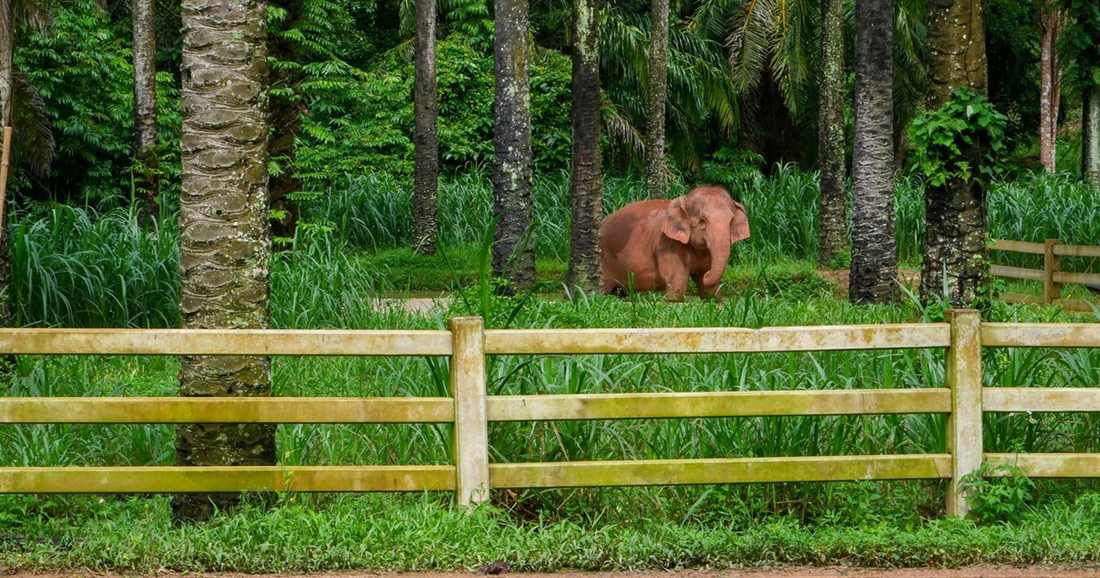
A krabi elephant sanctuary lets visitors meet elephants in a forest setting near Ao Nang and Krabi town. Sessions centre on feeding and bathing.
The sections below cover where the sanctuaries are, what ethical means and the elephants themselves. They also cover feeding, bathing, what to wear, the seasons, GetYourGuide listings and common questions. To plan trips elsewhere in the country, start from the Thailand Tours homepage.
What does a krabi elephant sanctuary visit cover?
A krabi elephant sanctuary visit is a half-day trip with hotel pickup and a return to your hotel. In between come a welcome, food preparation, feeding and time with the elephants. Each sanctuary sets its own steps.
The steps below follow the published itineraries of three sanctuaries near Krabi.
- Pickup: guests at one sanctuary are collected from a hotel or other accommodation in Krabi.
- Welcome: one sanctuary offers a welcome snack, tea or coffee and an introduction to its programme.
- Food preparation: guests at one sanctuary assist with natural dietary supplements for the elephants.
- Feeding: guests feed the elephants and give them the supplements.
- Walk: at another sanctuary, guests receive a fruit basket and walk alongside the elephants while feeding them.
- Mud and bathing: one plan adds a mud spa with the elephants, then a bath with them.
- Return: one morning plan ends with the return to the hotel at noon.
Not every plan has every step. A half-day plan at a third sanctuary lists an arrival and introduction. Then come a jungle walk with the elephants, seed balls and a Thai meal. It also lists a hotel drop-off, but it has no bathing step.
The third sanctuary says its guests observe the elephants and let them lead the way. The other two plans have guests bathe with the elephants.
Later sections cover each step in turn, from the setting to the rules for touching. Our Thailand tours page sets other trips side by side with this one.
Where can you find a krabi elephant sanctuary?
A krabi elephant sanctuary can sit about 10 minutes inland from Ao Nang. Another is about 50 minutes away in Ao Luek District. Sanctuaries offer pickup from Ao Nang, Klong Muang and Krabi Town.
Krabi Province lies on the shore of the Andaman Sea. It has eight districts. Ao Nang is one of the ten subdistricts of Mueang Krabi District. One sanctuary lists an address in Nong Thale, in Mueang Krabi. Another, near Ao Nang, lists an address in Khao Khram.
A district on the map still leaves the trip home to plan. Readers flying out of Bangkok can see how an airport fast track at Suvarnabhumi works on departure.
Drive times differ for each krabi elephant sanctuary. One guide lists a sanctuary about 10 minutes’ drive from Ao Nang Beach. One travel writer puts a sanctuary about 30 minutes’ drive from Krabi Town and not far from Ao Nang. The Ao Luek site is the farthest out on one guide’s list of seven.
Rubber and palm oil plantations make up 95 percent of Krabi’s cultivated land, according to Wikipedia. Forest covers about 915 square kilometres, or 17.2 percent of the province. Limestone formations called mogotes lie both inland and along the coast.
One site calls its setting a natural forest near Krabi Town. It also says the sanctuary is in the jungle. Another site lists walks with elephants in the jungle and by the river.
Pickup zones differ for each krabi elephant sanctuary. One guide says Railay guests are collected at Ao Nam Mao or Noppharat Thara. One sanctuary lists transfers from Tub Kaek and the Railay pier. Another collects Railay, Lanta and Phi Phi guests at the nearest pier: Nummao, Chao Fah or Klong Jirad.
What makes a krabi elephant sanctuary ethical?
An ethical krabi elephant sanctuary offers no rides and no shows. It aims to give elephants a wild or semi-wild home day and night. World Animal Protection advises visiting only venues where you can look, not touch.
The 236 tourism venues that World Animal Protection assessed in Thailand held 2,849 elephants. Trained researchers visited all 236 venues in person. The study used nine animal welfare criteria and found persistently low welfare standards. Over half of all the elephants spent daytime hours on short chains.
Those findings put welfare first. A day without animals is an option: the Chiang Mai zipline guide covers what else there is besides ziplining. The Chiang Rai day trip guide asks if the White Temple is a temple or an art exhibit.
Every krabi elephant sanctuary sets its own format. One sanctuary calls itself Krabi’s only observation-only sanctuary. It says it does not support elephant riding, bathing, feeding or unnatural performances. Another lists a hands-on programme where visitors bathe elephants and feed them fresh fruit. It also keeps a strict no-riding policy.
World Animal Protection advises against bathing elephants. It says elephants do not need tourists to wash them. It adds that elephants in a venue where you can ride, bathe or touch them have been cruelly trained.
Check any krabi elephant sanctuary against these red flags from World Animal Protection:
- Rides, shows or other inappropriate public interaction are part of the visit.
- Selfies and touching are on offer, which points to cruel and painful training.
- A baby elephant is on view, because responsible venues do not breed elephants.
- Elephants cannot move freely and express natural behaviour.
- Hooks are used outside a real emergency.
World Animal Protection reports that observation-only experiences with no direct human contact are increasing. The same report quotes Dr Jan Schmidt-Burbach: an observational experience does not guarantee better welfare for the animals.
Where do the elephants at a krabi elephant sanctuary come from?
Elephants at a krabi elephant sanctuary are Asian elephants. One sanctuary says its rescued elephants came out of logging and tourism work. A logging ban in nineteen eighty-nine left 70 percent of Thailand’s domesticated elephants jobless, the FAO reports.
The elephant found in Thailand is a subspecies of the Asian elephant, says Wikipedia. A fully grown bull stands about 2.75 metres tall at the shoulder and weighs about 4 tonnes. Cows stand about 2.4 metres at the shoulder and weigh about 2.7 tonnes. An Asian elephant eats up to 150 kilograms of plant matter a day.
Elephant diets are one matter, and the visitors’ own meals are another. A guide to the elephant sanctuary in Phuket tackles that second matter and asks what the kitchen does about allergies.
In the wild, an Asian elephant reaches an age of about 60. Groups of cows and calves travel together. Bulls leave their mothers in adolescence and live alone or in temporary bachelor groups. WWF says female Asian elephants live in herds with their female relatives. One krabi elephant sanctuary lists 14 rescued elephants on over 85 acres.
An FAO report says Thailand had about 100,000 domesticated elephants one hundred years before it was written. Almost all of them worked in the logging industry.
In nineteen eighty-nine, a government logging ban to preserve the existing forestland left 70 percent of domesticated elephants without work. The report adds that elephants and their mahouts can be found working in tourism in all regions.
Wikipedia names the Beast of Burden Act of nineteen thirty-nine as the law on captive elephants. It classes elephants as draught animals, alongside horses, donkeys and oxen.
Laws are one way to read the past. Whether one day is enough for Siam’s old royal capital is answered in the Ayutthaya tour from Bangkok guide. For the river after dark, the Chao Phraya dinner cruise guide collects what travellers ask.
One guide to Krabi sanctuaries calls a shelter a home for elephants from forestry work and riding camps. One krabi elephant sanctuary says captive elephants cannot be returned to the wild. Its aim is to let them live in captivity as wild as possible, free from work. Its oldest elephant is 48 years old.
What happens during feeding and bathing at a Krabi elephant sanctuary?
At a krabi elephant sanctuary with hands-on visits, guests prepare food and hand-feed fruit. They then bathe with the elephants in a river, pool or mud pond. One programme with feeding, a mud spa and bathing lists 1.5 hours.
Food preparation differs between sites. One Krabi elephant sanctuary has visitors chop fruit and vegetables for the elephants’ meals. Another lists guests who cook protein balls and feed the elephants. A third has guests prepare treats and set them on feeding trays so the elephants eat at their own pace.
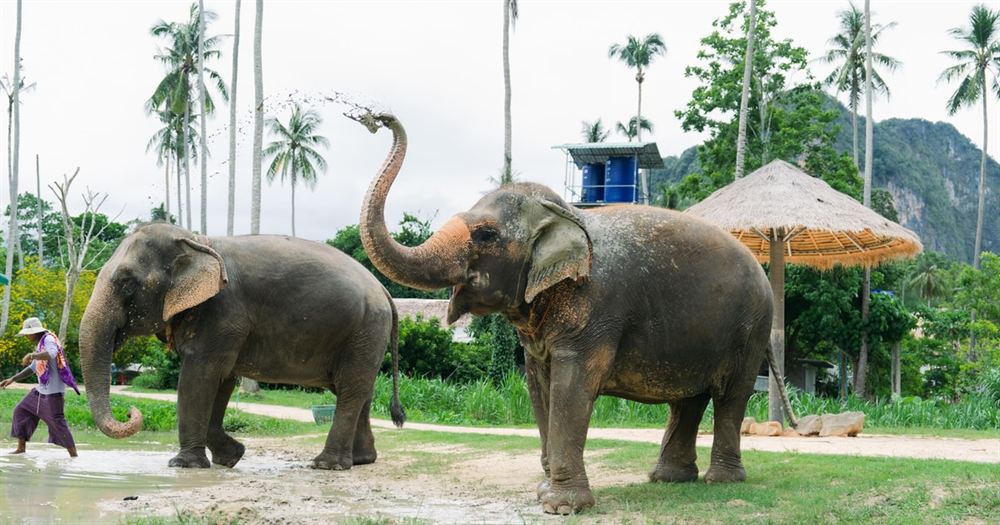
One sanctuary lists fresh fruit for feeding: bananas, pineapples and sugarcane. Another says visitors feed fresh fruit out of the palm of the hand. Feeding sessions differ in length. One sanctuary lists a fruit-feeding programme at 60 minutes. One operator lists a feeding session at 30 minutes.
A mud spa comes before bathing at one Krabi elephant sanctuary. Guests then help wash the elephants in a natural water area. Another site lists a bathing session in a canal or mud pool, where the elephants wallow at their own pace. A third lists bathing in a large pool and calls the mud spa optional.
Each Krabi elephant sanctuary writes its own touching rules. One page says visitors can touch, cook, feed and bathe with the elephants. Another page calls its visit hands-on and says guests get up close with the elephants. It adds that experienced staff keep all interactions safe and supervised.
One roaming sanctuary lists no bathing, no mud bathing and no direct physical contact. Its guests arrange fruit on feeding trays and watch the elephants from a respectful distance. Another sanctuary lists a no contact elephant policy.
Which clothes and gear suit a visit to a krabi elephant sanctuary?
Choose outfits that are fine to get soaked and muddy. Pack dry clothes, sandals or water shoes, sunscreen and insect repellent. One krabi elephant sanctuary lists all of these. An entry fee applies, so confirm the price when you book.
Footwear advice differs from one krabi elephant sanctuary to the next. One sanctuary lists sandals or water shoes. One guide to a feeding and bathing visit advises closed shoes with grip. One no-touching sanctuary supplies boots.
Shoes are not the only item on the packing list. Bags are the next question, and the elephant sanctuary tour in Chiang Mai page explains what luggage you can bring.
For a bathing visit, pack a spare set. One sanctuary lists swimwear to wear under clothes and a change of dry clothes. It provides changing facilities and shower areas. One tour listing asks guests to bring a towel. Another asks guests to remove rings, because they can get lost in the mud or pool.
Plan for sun and insects at a krabi elephant sanctuary. One sanctuary lists sunscreen, insect repellent, a hat and a waterproof camera or phone case. One guide recommends light long trousers against insects and scrub. The same guide advises no flash around the animals.
Visitor rules centre on distance and supervision. One no-touching sanctuary tells guests to stay near the guide or mahout. It says not to go too close to the elephants. One listing bars pets and outside food and drink.
Two tour guides say the visit is not for pregnant women or anyone over 95 years old. One adds that babies under one year cannot join. One guide says to keep young children close at feeding time. Operators list separate adult and child fees, so check the age bands at a krabi elephant sanctuary.
Age bands and fees are worth reading before any booking, whatever the trip. The Muay Thai tickets in Bangkok guide lists what the GetYourGuide packages include for fight nights.
Terrain matters for guests with limited mobility. One no-touching sanctuary says its Krabi site sits on flatter terrain. It calls the visit easier for anyone with mobility issues. One guide calls the ground at its site uneven, compacted earth rather than paved paths.
What season suits a krabi elephant sanctuary visit?
January is the driest month in Krabi, with 32.0 mm of rain over 5.3 rainy days. October is the wettest, with 323.5 mm over 21.5 rainy days. Plan a krabi elephant sanctuary visit around those long-run averages.
Wikipedia describes a ten-month rainy season between March and December. Its table of averages shows rain building from 32.0 mm in January to 147.2 mm in April. The wettest run is August to October, at 266.3, 275.2 and 323.5 mm.
The national climate guide on Wikipedia says southern Thailand gets abundant rain, particularly in October and November. In the Krabi table, November brings 179.7 mm. December drops to 67.8 mm, and February has 43.4 mm.
One guide to a single Krabi sanctuary says its programme runs daily. It says the rainy season is not a reason to skip the visit. The ground is red clay in dry months and muddy after rain. Afternoon thunderstorms can arrive quickly.
Wet ground calls for planning. A canal tour in Bangkok needs the same, and its guide sets out when to go and what to bring. Distance is another question: the Bangkok floating market tour guide says how far it lies from central Bangkok.
Two sanctuary sites list both morning and afternoon visits. One operator lists pickups at 08:00 and 13:00, depending on the hotel. One listing recommends mornings from 9:00. It says the elephants stay interactive and the park is slightly less crowded.
One guide describes an afternoon programme with pickup at 13:00 and drop-off around 18:00. Bathing falls in the late afternoon, when temperatures have dropped slightly. Dry-season afternoons can still be hot, the guide adds.
The Wikipedia entry for Krabi Province puts annual tourist arrivals at around six million. That entry names November through April as the peak season. One sanctuary advises booking in advance.
Which krabi elephant sanctuary tours can you book on GetYourGuide?
The eight top GetYourGuide listings for a krabi elephant sanctuary visit run from 30 minutes to 3 hours. The main package, tour 442369, is a 1.5-hour bathing session. Pickup and free cancellation are included, and 2,642 reviewers give it 4.9.
The main listing, Krabi: Elephant Bathing Session at Krabi Elephant Shelter, lets you bathe or shower with elephants. You learn how to feed them. A guide teaches you about elephants.
The Ao Nang Elephant Sanctuary Half-Day Tour has 2,262 reviews, the second-highest count of the eight. Its rating is 4.8. This krabi elephant sanctuary trip lasts 3 hours and carries a Bestseller label. Its highlights list a mud spa day with the elephants.
The Ao Nang Elephant Sanctuary Tour fits into 1.5 hours and averages 4.7 across 240 reviews. Of the eight, it alone carries a Wheelchair accessible label.
Two krabi elephant sanctuary listings promise no touching. Across 274 reviews, the 2-hour No-Touching Roaming Elephant Sanctuary Guided Tour holds a 4.9. The 3-hour Half-Day & Meal listing has 37 reviews averaging 5.
The Traditional Thai Dress listing has 212 reviews averaging 4.7. It lists treats, photo help and transfers from Ao Nang and Klong Muang. Guests chop fruit on the Food Preparation listing, which scores 4.8 across 62 reviews.
The Ethical Elephant Sanctuary & Tiger Cave Temple Tour is the only one with a temple stop. It runs 3 hours, and its 185 reviews average 4.3. Booking closes 10 hours before the start. The abstract lists a Thai lunch and a temple climb.
Every one of the eight shows a Free cancellation label and a Pickup available label. Cut-off times run from 2 hours to 10 hours.
What else can you learn about the elephants at a krabi elephant sanctuary?
The answers below cover the elephants at a krabi elephant sanctuary. They deal with conservation status, keepers, mud baths and the place of elephants in Thai culture. Elephants sleep for 3 to 4 hours a day on average, according to Wikipedia.
Are the elephants at a krabi elephant sanctuary endangered?
The Asian elephant has been listed as Endangered on the IUCN Red List since nineteen eighty-six, says Wikipedia. It adds that the population has declined by at least 50 percent over the last three elephant generations. That span is about 60 to 75 years.
What is a mahout?
In Wikipedia’s words, a mahout is the rider, the trainer or the keeper of an elephant. It gives the Thai word as kwan-chang. Traditionally, a mahout keeps the same elephant for the whole of its working life.
Why do elephants wallow in mud?
Wikipedia says an elephant’s skin is tough but very sensitive. The skin requires mud baths to maintain moisture and to guard against burning and insect bites. After bathing, the elephant will use its trunk to blow dust onto its body. The dust dries into a protective crust.
Is the elephant a symbol of Thailand?
Yes. Wikipedia calls the Thai elephant the official national animal of Thailand. It names the white elephant as the Thai sacred and royal symbol. White elephants in Thai society also represent wealth and power because of their past association with the Thai royals.